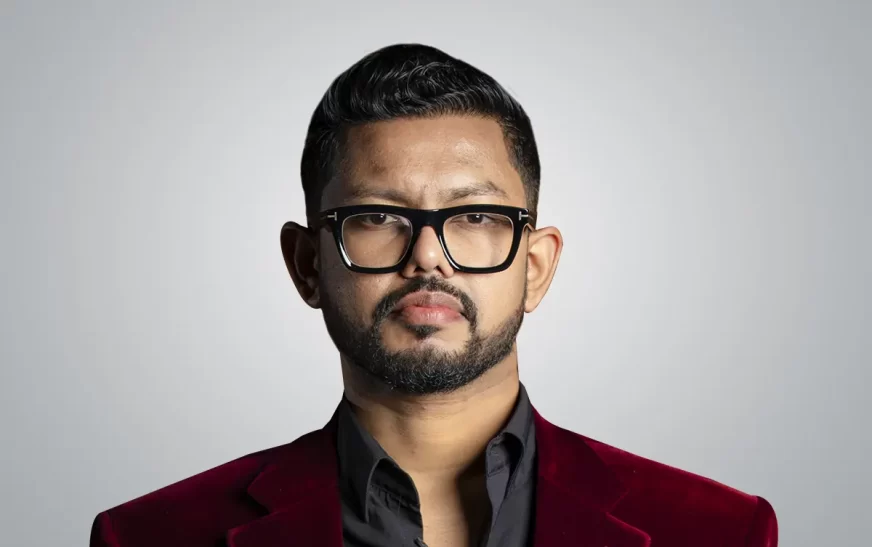
Turning Financial Pressure into Business Opportunity
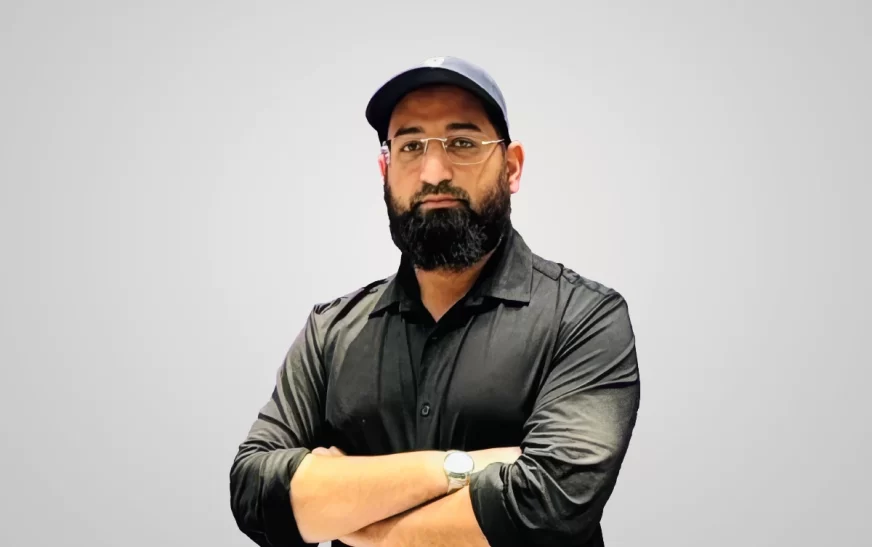
Muhammad Tayyab Popalzai
Group Finance Director & CFO
Bin Hilal Group
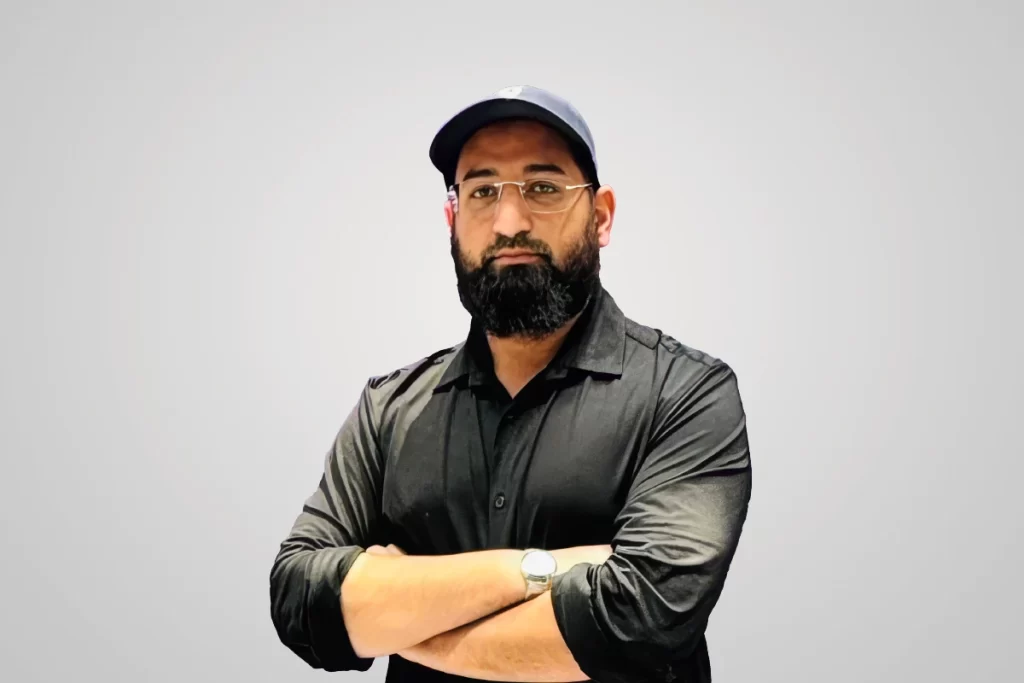
Turning Financial Pressure into Business Opportunity
Muhammad Tayyab Popalzai
Group Finance Director & CFO
Bin Hilal Group
Muhammad Tayyab Popalzai-10 Best CFOs from Asia 2026
When markets weaken, cost-cutting can buy time, but restoring growth demands deeper change. Muhammad Tayyab Popalzai, Group Finance Director and CFO of Bin Hilal Group, Dubai, faced this challenge in 2019 when market cyclicality weakened the group’s order backlog and tightened liquidity, followed by the COVID-19 crisis. Rather than retreat, he focused on remodelling the business.
Muhammad strengthened credit controls, disciplined costing, ERP systems, and real-time reporting to improve financial visibility and operational decisions. The business returned to profitability within a year. Over the next three years, it grew several times over on the same capital base and began paying dividends. His approach reflects lessons from years of financial responsibility, including reconstructing financial statements at Bin Hilal Group and progressing from senior accountant to Group CFO over a decade. These experiences shaped Muhammad’s belief that financial discipline must inform business strategy, especially when uncertainty tests an organisation’s resilience.
In an exclusive interview with TradeFlock, Muhammad discusses the challenges, decisions, and leadership lessons behind the group’s recovery and growth.
What has been your toughest challenge, and what did it teach you about creating value across a diversified group?
Value in a diversified group is created or lost division by division. My toughest challenge has been allocating resources across seven entities pursuing organic growth, with cash flow remaining the central constraint. Every investment must be evaluated to ensure each business receives the right resources at the right time.
I have learned that consolidated figures can conceal underlying weaknesses. A group may appear financially healthy while one division struggles with liquidity. Creating value means looking beyond overall numbers, understanding individual business needs, and directing capital where it can deliver the strongest returns.
Managing cash flow, banking relationships, corporate development, contracts, and operational priorities has reinforced one lesson: working capital cannot be managed in silos. Optimising cash flow requires treating seven entities as interconnected parts of one financial system.
What has experience across industries taught you about navigating volatile markets?
Most leaders, when business is growing, focus on the top line and overlook the one measure that determines whether that growth is sustainable: cash flow. Experience has taught me that creating value is not enough; a business must capture it. Growth that fails to convert into cash can quickly become a liability when markets turn.
I have also learned that strong controls must be established before a crisis tests them. Equally important is keeping the business lean. I have balanced operating/non-operating expenses – for example , combined in-house teams with outsourced labour for lower-margin work, kept a mix of fleet both owned and leased in order to keep fixed costs deliberately low etcetera. These choices have reinforced a lesson I carry across volatile markets: financial flexibility is not merely an efficiency measure; it is what gives a business room to absorb shocks and keep moving forward.
How can modern CFOs influence business strategy beyond finance, and what shaped your approach?
Finance is moving from gatekeeping to guiding business decisions. To make this shift, CFOs must understand business leaders’ priorities, operational challenges, and the business models driving performance. You cannot navigate a business without understanding how it operates.
Working across functions has shown me how finance can reshape operating models, strengthen controls, and give divisions greater autonomy. In 2019, I personally developed Power BI dashboards for divisions, the chairman, and the CEO, enabling faster, data-driven decisions. Today, AI-enabled dashboards integrated with ERP systems deliver deeper operational insights. I invest as much energy in these capabilities as in financial statements because better decisions, not numbers alone, ultimately drive business performance.
How do you balance growth, liquidity, risk, and long-term value when financial data alone cannot guide the decision?
Balancing growth, liquidity, risk, and long-term value requires understanding risk beyond the numbers. I align decisions with board priorities, organisational values, and committed targets. Growth remains the ambition, but liquidity and risk determine how sustainably we can pursue it. I also involve banking partners early because timely funding can turn an opportunity into growth.
COVID-19 tested this approach. While businesses retreated and liquidity tightened, we partnered with the government on pandemic-response projects, including facility development. Later, we pursued a government project beyond an entity’s previous scale, supported by substantial funded and non-funded banking facilities. This accelerated its growth within a year.
However, growth also increases credit exposure. We strengthened safeguards through expected-credit-loss policies, credit-score monitoring, faster payment options, and sales KPIs linked to collections. Financial data quantifies risk, but judgement determines whether an opportunity is worth pursuing—and the CFO must own that decision.
What has your journey taught you about mentorship and creating opportunities for the next generation?
My belief is simple: if you want to multiply something, start sharing it. I participate in finance platforms where experienced professionals mentor younger colleagues while learning from one another. Mentorship should be a two-way exchange, not a lecture.
Doubtless, having skilled workforce is of competitive advantage but what is of greater challenge is to retain trained people. Especially Gen-Z. I understood this at my early career that if growth plan is in place then it is seldom to witness turnover. I have built my team from one person to around 25, most of them are with me 6+ years because throughout their career I have been developing talent through training, courses, and promotions. For example – One office assistant I met in 2017 held a diploma, so I invested time in his development. When an accounts clerk opportunity arose, I brought him in as an intern. He went on to spend six years working in accounts payable. Another colleague progressed from receptionist to project coordinator. These experiences taught me that giving people responsibility, guidance, and trust can change the course of their careers.
All Magazines -



Success Insights
Muhammad Tayyab Popalzai-10 Best CFOs from Asia 2026
Ravindranath Garaga-Best CXOs in Asia 2026