Building Human Judgment Into the Future of Work
Gita Poudel
Director of Human Capital & Compliance
Maganti IT Resources LLC

Building Human Judgment Into the Future of Work
Gita Poudel
Director of Human Capital & Compliance
Maganti IT Resources LLC
Gita Poudel-Most Empowering Women Leaders to Watch in 2026
The future of work is being shaped in the space between human judgment and technological change, and few careers reflect that intersection as naturally as Gita Poudel’s. As Director of Human Capital & Compliance at Maganti IT Resources LLC, she brings more than 20 years of experience across HR, compliance, international cultures, process improvement and, increasingly, AI governance. Her unconventional path, spanning paralegal work, Six Sigma, language teaching in Seoul and global HR leadership, has become a strength in understanding how people, systems and cultures influence one another. Today, she is extending that perspective through AI governance, workforce strategy and initiatives such as WorkIQ AI, while also helping C-suite leaders shape their executive presence through The Boardroom Brand. TradeFlock interviewed Gita to explore how adaptive leadership, cultural intelligence and responsible technology can shape a more human future of work.
Which turning point changed how you understand leadership?
Leaders cannot use the same playbook forever. Adapt and survive has always been the foundation of my career, though I didn’t fully understand what that meant until I stood in a classroom in Seoul, teaching across a language and culture gap that no lesson plan could fully account for. Tone, idiom and shared context could not carry the message for me. I had to strip every idea down to its core and know exactly what I meant before expecting someone else to understand it.
Looking back, that became some of the best leadership training I ever received, long before I had the title to call it that. Seoul taught me structural respect, while my upbringing taught me relationship-first patience and American workplaces taught me the value of directness. Leadership is not about defending one “correct” style. It is about developing the judgment to know which approach a particular moment needs.
My career now makes more sense in hindsight. Teaching, paralegal work, Six Sigma, HR and AI governance were never detours. Each experience quietly cross-trained me for the next, and the complexity I once might have explained became one of my greatest assets.
What makes employees trust AI at work?
Employees do not fear AI in the abstract. They fear the part of its use nobody has explained. Most rollouts begin by highlighting capability, explaining what the technology can now do, while leaving its boundaries unclear. Anxiety naturally fills that gap.
One step leaders often overlook is involving employees in defining those boundaries before deployment rather than gathering feedback afterward. There is a meaningful difference between telling someone how a system will affect their work and allowing them to help establish where it should and should not be used. When employees can genuinely say, “AI can help with X, but decision Y stays human,” the technology feels built with them rather than around them.
I would communicate constraints as concretely as capabilities. Saying, “This tool will not be used as the sole basis for termination decisions,” can do more for trust than another efficiency statistic. Efficiency earns adoption, but explicit boundaries earn trust.
How much governance is enough when innovation moves fast?
Governance becomes counterproductive when every decision is treated as though it carries the same level of risk. I have seen organisations apply so much rigor to low-risk experimentation that people become fatigued, while genuinely high-risk decisions can receive less scrutiny simply because everything has been given the same weight.
Risk-tiered governance provides a better balance. The level of control should match the reversibility and human impact of the decision. An internal AI drafting tool needs a lighter touch than a system influencing termination or compensation recommendations.
My line is drawn around reversibility and human impact. Decisions that are difficult to undo and affect someone’s livelihood deserve stronger documentation, human review and audit trails. Low-stakes decisions that are easy to reverse should retain room for experimentation. Regulatory frameworks are increasingly moving in this direction too, using risk tiers rather than blanket controls.
“My complexity became an asset rather than something I needed to explain away.”
Where does AI create the greatest risk of losing employee trust?
Technology does not have to make an obvious mistake to create a very real problem. Sometimes the more dangerous outcome is the one nobody notices because it simply looks like the average. AI systems trained on workplace data naturally learn dominant patterns, whether that is the majority communication style, definition of professionalism or signals associated with confidence and competence.
I have seen this directly in AI governance work. A hiring tool trained around one cultural communication style can misread indirect confidence, accented but substantive communication or relationship-first negotiation as deficiencies rather than differences. In a genuinely global workforce, anyone who does not fit the average can quietly be underrated.
The answer is not banning AI from these decisions. Human cultural and contextual judgment needs to remain actively involved, alongside meaningful human review, transparency about AI use and regular bias testing against actual outcomes rather than intentions. Trust erodes when employees feel a system is deciding about them while nobody remains accountable for what it missed.
What should organisations rethink about talent?
The workforce is changing quickly enough that hiring for yesterday’s credentials can leave an organisation unprepared for tomorrow’s needs. I have become increasingly convinced that organisations need to hire for learning velocity, not simply static credentials. The half-life of technical skills is shrinking, and the person who can rapidly acquire the next skill may ultimately be more valuable than someone who has mastered the current one.
Development needs the same rethink. One-time onboarding and annual training calendars should give way to continuous, personalised skill-building embedded into actual work, with visibility into emerging gaps before they become hiring emergencies.
The talent strategy I would bet on is the internal talent marketplace. Existing employees should be treated as a searchable pool of adjacent capabilities rather than organisations defaulting to external hiring whenever a new need appears. It creates visible growth paths, improves retention and surfaces unconventional talent, including people whose backgrounds do not fit one neat job description but who may be exactly what an emerging problem requires.
All Magazines -


Success Insights
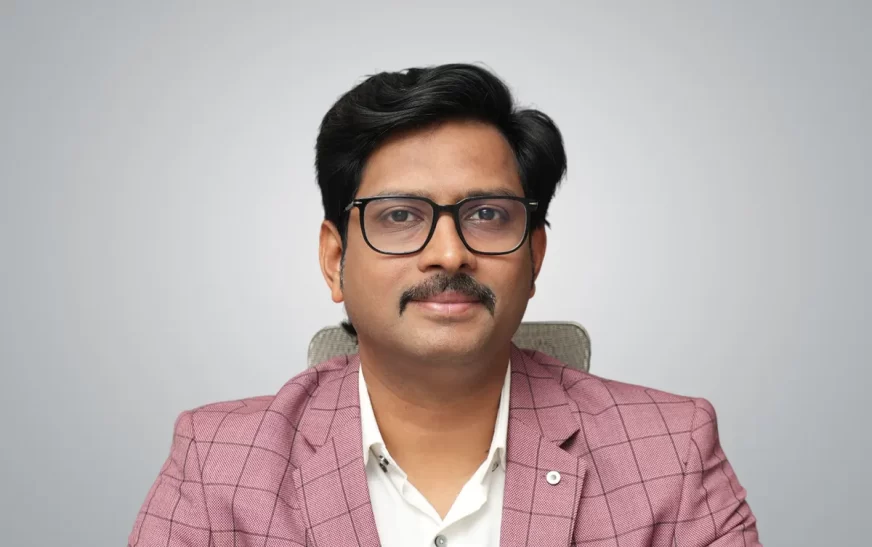
Ravindranath Garaga-Best CXOs in Asia 2026
Dr Tharindu Samarajeewa-Asia’s 40 Under 40 2026