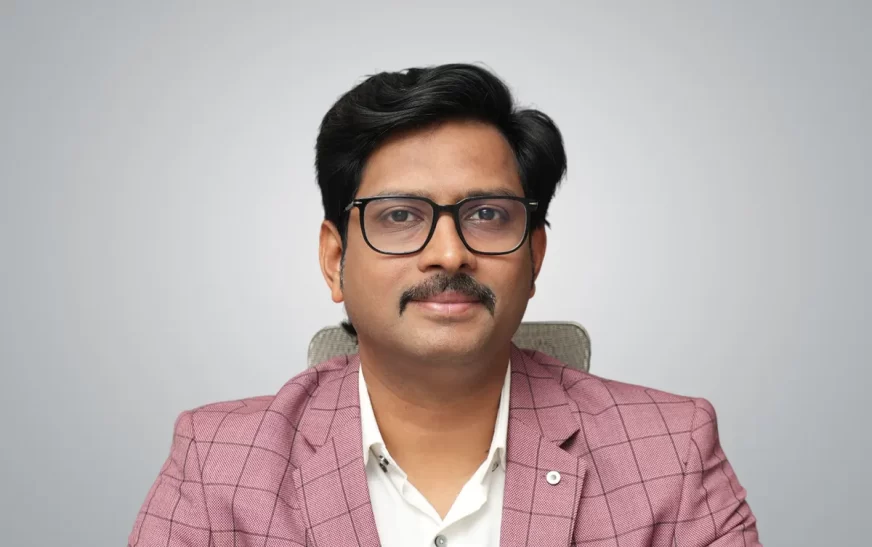
Abhay Pandita does not subscribe to the mythology of the all-knowing tech leader. As CEO of byteeIT, he believes certainty in technology fades quickly, and unchecked brilliance often becomes a bottleneck rather than an advantage. “The smartest guy in the room is usually the biggest constraint,” he says, a belief that shaped his move from command-and-control leadership to distributed intelligence.
This philosophy drives how Abhay builds teams. At byteeIT, people are not hired to follow instructions; they are hired to expand what is possible. Cognitive agility, the ability to unlearn outdated solutions as quickly as new ones are adopted, is valued above static expertise. Abhay fosters a culture in which even a junior developer can challenge the CEO’s assumptions, provided the data supports them. Hierarchy gives way to insight, and curiosity is treated as a core leadership skill.
Strategically, this mindset keeps the organisation lean and adaptive. Instead of rigid five-year plans, byteeIT operates through high-speed feedback loops like brainstorming, prototyping, testing, and pivoting. By acknowledging that not all answers exist on day one, Abhay ensures the company can move faster than change itself.
Beyond technology, he champions combining AI-driven innovation with content-led communication to create impact across workspaces and communities. Abhay’s journey reflects a focus on purpose, adaptability, and human connection. A sportsperson at heart and avid cricket enthusiast, he brings the same energy, teamwork, and situational awareness from the field into leadership—asking sharp questions, connecting the right minds, and letting collective intelligence drive progress. Abhay shares insights about his journey and work with TradeFlock.
What’s the hardest lesson you’ve learned while moving AI from experimentation to real-world value?
The hardest challenge wasn’t the AI models themselves, but the realities surrounding them, like the data hygiene and the “last mile” of execution. Early at byteeIT, we saw that while everyone wanted the magic of AI, few were prepared for the unglamorous work of cleaning, structuring, and governing data. Concepts that looked brilliant in controlled environments often faltered when exposed to messy, live operations.
The key lesson was clear: AI is only as strong as the architecture beneath it. We shifted from chasing shiny use cases to building solid data foundations. Today, our approach is problem-first, AI-second; using AI only when it meaningfully solves real human and business friction.
How do you ensure your organisation and its people stay ahead of digital disruption in the long term?
Staying ahead of disruption isn’t about predicting the next breakthrough technology; it’s about designing an organisation that is change-ready by default. At byteeIT, my long-term strategy is anchored in institutional curiosity and technical sovereignty rather than any single trend or platform. First, we treat upskilling as a continuous service, not a one-off initiative. I encourage teams to measure their value not by what they know today, but by how quickly they can learn tomorrow. This shifts the mindset from fearing AI to embracing it as an augmenting force.
Second, we build modularity into everything we do. Our systems, processes, and technology stacks are designed like Lego blocks—flexible, replaceable, and scalable without destabilising the core. You can’t stop the waves of digital change, but you can build a better boat. My goal is to ensure our people have the skills, and our systems the adaptability, to consistently ride the wave rather than be overtaken by it.
How have your past ventures shaped your approach to risk, resilience, and innovation today?
Building multiple ventures has fundamentally reshaped how I view risk, resilience, and innovation. I’ve learned that risk isn’t the enemy. It’s a commodity that needs to be priced correctly. The biggest danger is not making mistakes but standing still while the market moves. That perspective now anchors how I lead byteeIT.
First, I see risk through the lens of optionality. Rather than betting everything on a single idea, we run low-cost experiments. If something fails, we learn quickly and move on; if it works, we scale it decisively. Second, resilience is a muscle built in adversity, not comfort. The zero-revenue days and
system-down nights of my earlier ventures gave me real perspective. Having been through those moments, I’m able to stay calm during crises, and that calm helps steady the team.
Finally, innovation is not magic; it’s discipline. Experience taught me to stop falling in love with my own ideas and start obsessing over customer problems. Today, at byteeIT, I focus on sustainable speed, but with enough control and resilience to ensure the wheels never come off.
What’s the biggest misconception leaders have about technology transformation today?
A common misconception among leaders is that technology transformation has a clear finish line. Many still approach it like a one-time project—implement the system, move on, and declare success. I see it very differently. Transformation is a permanent state of evolution, not an event.
At byteeIT, I’ve reframed the conversation from buying technology to building capability. Instead of asking when a system will be “done”, we ask how much faster we can learn and adapt. We avoid big-bang launches and focus on continuous micro-transformations. My role isn’t to be a chief software buyer but a chief friction remover because transformation fails when culture moves slower than code.