From Investment Thesis to Operating Reality - Building Value in Brazilian Healthcare
Carlos Ceppas Lynch
CFO
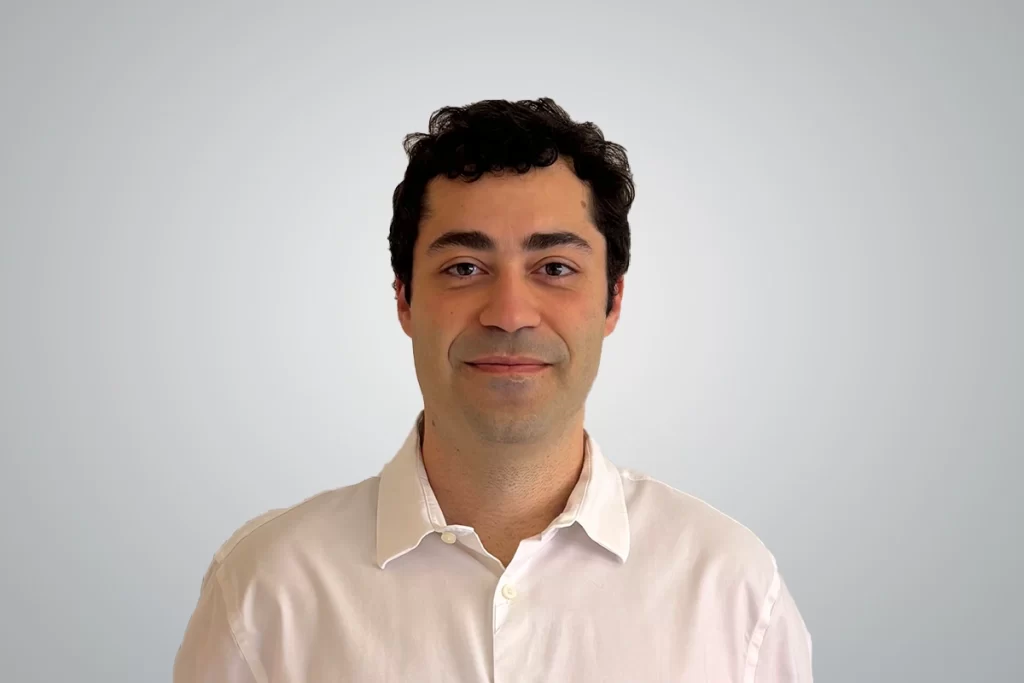

From Investment Thesis to Operating Reality - Building Value in Brazilian Healthcare
Carlos Ceppas Lynch
CFO
Carlos Ceppas Lynch-Most Inspiring Global Finance Leaders 2025
If you were to map Carlos Ceppas Lynch de Araujo’s career, it would be better described as a structured framework than a linear path. His work brings together three elements: value identification, capital discipline, and execution. Across different roles and contexts, a common principle emerges—finance is most effective when it supports sound, long-term decision-making.
Carlos began by analysing businesses from the outside, developing a clear understanding of how value is created and scaled. This experience shaped a practical mindset focused on clarity, prioritisation, and longterm impact. When he moved into executive leadership, those same principles guided his approach, allowing him to translate financial insight into strategic momentum.
Today, as CFO of Grupo Valsa, Carlos applies this structured thinking to a private equity–backed investment thesis he helped build from inception. His role spans corporate finance, capital allocation, investor relations, and M&A, with a strong emphasis on alignment between strategy and numbers, management and investors, and nearterm actions and long-term outcomes. His investor perspective enables focused, data-driven dialogue with boards and stakeholders.
In M&A, Carlos brings a full-cycle view, assessing opportunities through strategic fit, integration planning, and sustained value creation. A CFA Charterholder, he holds a master’s degree in finance from the University of Rochester and is currently a PhD candidate at FGV EPGE. He also contributes to financial thought leadership through O Globo and the CFA Institute. Speaking with TradeFlock, Carlos shares insights from his journey and his winning strategies.
How do your CFA and PhD studies complement your hands-on experience in corporate finance?
I have always enjoyed studying, so the academic path came naturally to me. After completing my master’s degree at the University of Rochester, I spent nearly ten years in hands-on finance and corporate roles before returning to academia for my PhD. Today, I operate in both worlds, pursuing a PhD level training while serving as a company CFO. Academia and corporate life quickly blended into a feedback loop. Academic training helps me frame problems with rigor and to better challenge assumptions. At the same time, the day-to-day corporate challenges help me on where to focus my academic research. This became clear early in my PhD, when an article I wrote on quarterly earnings and corporate myopia was published by CFA Institute. I was able to engage with the academic literature while also using my experience as a CFO to provide an internal perspective on incentives and operational chokepoints.
What are the key challenges of scaling businesses through acquisitions in Brazil, and how does governance drive integration success?
Scaling businesses through acquisitions in Brazil is as much a test of judgment as it is of capital. High interest rates, with government bonds yielding around 15 percent, push hurdle rates higher and leave little room for execution error. Even well-priced acquisitions can quickly lose value if integration discipline is weak, making capital allocation a critical challenge.
Geography adds further complexity. Brazil is a continent-sized market with sharp regional differences in business practices, labor dynamics, and decision-making styles. Integration strategies must therefore be locally sensitive. What works in one region may not translate to another, and differences in management pace and organizational norms can significantly influence outcomes.
Governance is the real differentiator. Much of Brazil’s economy is driven by family-owned businesses with informal structures and overlapping personal and corporate interests. Successful integration requires cultural transition more than financial restructuring. Clear governance frameworks, aligned incentives, and defined processes create trust, accountability, and a foundation for sustainable, scalable long-term growth.
What does it take to turn a healthcare investment thesis from a concept to a fully operating business, as you did with Grupo Valsa?
It started with the identification of a structural opportunity in an underexplored niche within the Brazilian healthcare sector. Despite being a large country with a rapidly aging population, Brazil still lacks adequate long-term care infrastructure, including nursing facilities, rehabilitation centers, palliative care units, and homecare services. To put this into perspective, in the U.S. and Europe this segment is large enough to support publicly traded companies, while in Brazil the number of providers could be counted on one hand, most of them small, boutique operations.
Lorinvest Asset Management, a leading LatAm private equity, backed this investment thesis and we moved from concept to execution. We acquired four small, family-owned businesses, structured a shared back-office to unlock synergies and centralize governance, and built three rehabilitation facilities from the ground up (one still pre-operational). The transition from thesis to operation was fast and demanding. Along the way, we learned some hard lessons. Founder integration proved challenging, and misaligned incentives turned out to be far more damaging than initially anticipated. We also faced execution risk on the construction side: projects ran over budget and behind schedule, directly impacting operations and working capital. We fell victim to overconfidence, assuming revenue would materialize faster and at higher average ticket levels. The ramp-up took longer than expected, forcing adjustments in capital allocation, expectations, and operating discipline.
Entrepreneurship is difficult and decisions
"The best thing about working in a fast growing company is that you only experience two emotions: euphoria and terror"
often have to be made without perfect information or good options. At the same time, personal growth is immense, and when progress finally materializes, the sense of achievement is deeply rewarding. As Marc Andreessen puts it, the best thing about working in a fast-growing company is that you only experience two emotions: euphoria and terror.
All Magazines -


Success Insights
Ande Aditya-Best CXOs in Asia 2026

Olena Khlon-Best CXOs in Asia 2026